 ⚠ Moderate
Fertiliser Burn — Nutrient Toxicity
Commonly affects: Most aroids — Monstera, Philodendron, Syngonium, Anthurium, Alocasia
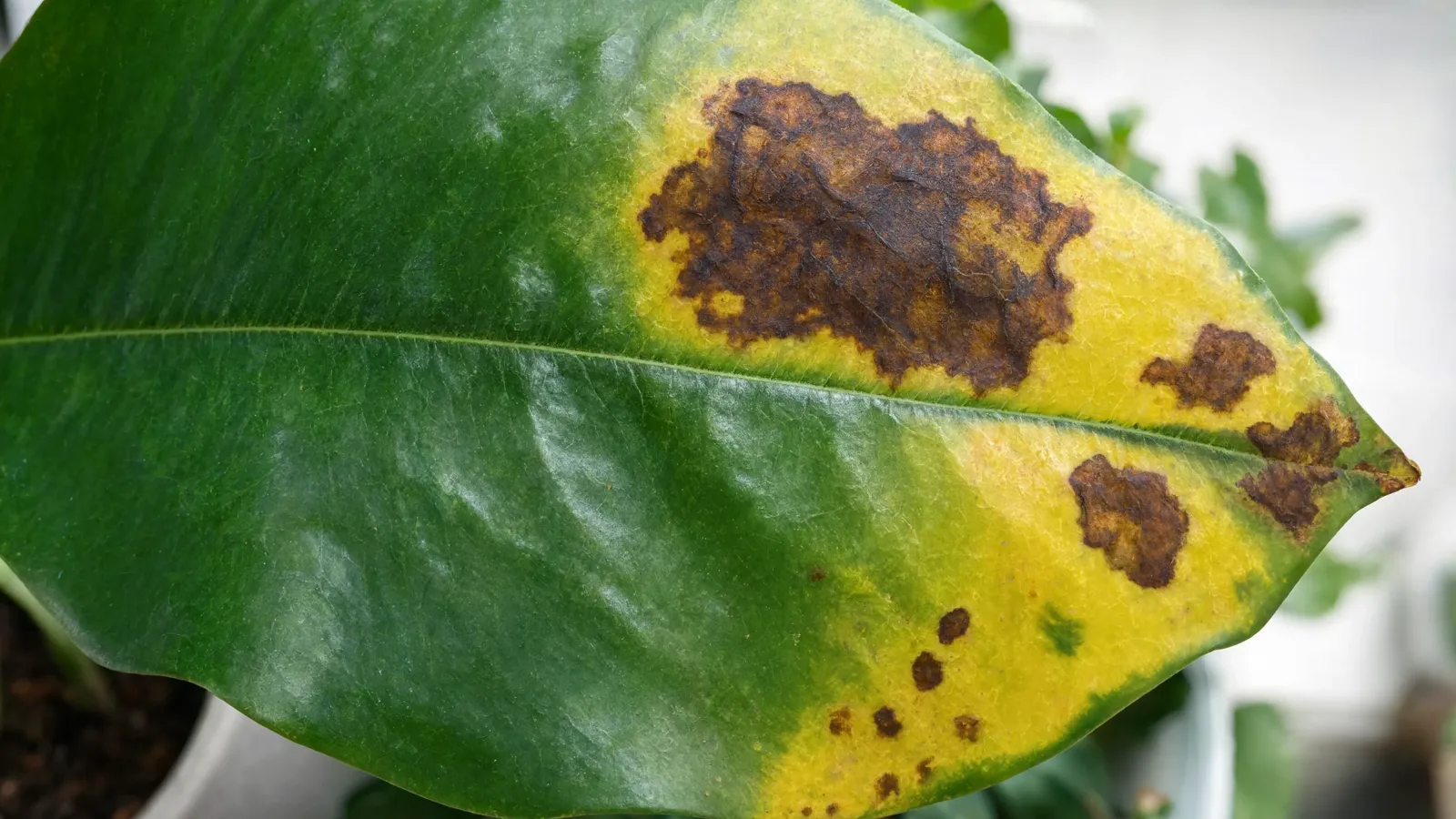
Leaf tips and margins turn brown and crispy, often quite suddenly after feeding, and a white crust of fertiliser salts may appear on the substrate surface or pot rim. Roots can be chemically scorched, leading to wilting despite moist soil. The damage results from an excessive concentration of dissolved salts drawing water out of the roots — the opposite of the deficiency it is sometimes mistaken for.
Potential Causes
- 1Over-application or too-concentrated fertiliser solution
- 2Feeding a dry root ball, concentrating salts directly against the roots
- 3Accumulated fertiliser salts from repeated feeding without flushing
- 4Slow-release granules over-applied or concentrated in one spot
Solution Steps
- 1Stop fertilising immediately and flush the substrate thoroughly with clean water — run water through for several minutes to leach out excess salts.
- 2Repeat the flush after an hour to further dilute and wash away accumulated salts.
- 3If a heavy slow-release dose is the cause, remove the visible granules and top salt-crusted substrate.
- 4Trim badly scorched leaf tips and margins for appearance.
- 5Resume feeding only at half strength once the plant recovers, and always onto pre-moistened substrate.
- 6In severe cases, repot into fresh substrate to give roots a clean start.
Prevention Tip
Always feed at or below the recommended dilution and onto already-moist substrate, never a bone-dry root ball. Flushing the substrate with plain water every few weeks during heavy feeding prevents the salt accumulation that causes burn.
Related Issues to Explore

Salt Crust & EC Build-Up in Substrate
Fertiliser burn and salt build-up are two stages of the same problem — flushing the substrate addresses both the acute burn and chronic accumulation.
Read guide
Brown, Crispy Leaf Tips — Low Humidity & Salt Stress
Both produce crispy tips — fertiliser burn follows feeding and shows salt crust, while humidity tip burn relates to dry air.
Read guide
Root Rot — Pythium & Phytophthora Infection
Chemically scorched roots from fertiliser burn are vulnerable to opportunistic rot — flush promptly and keep the recovering root zone from staying soggy.
Read guideMore Leaf Problems Problems
See all →
Real Monstera grow diaries
Growers on DailyGrowers log their plant week by week, one photo at a time. Here's how theirs are going.
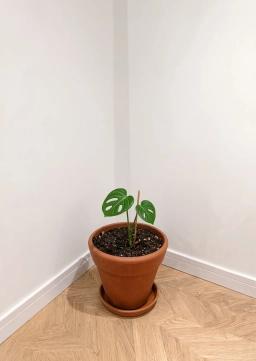
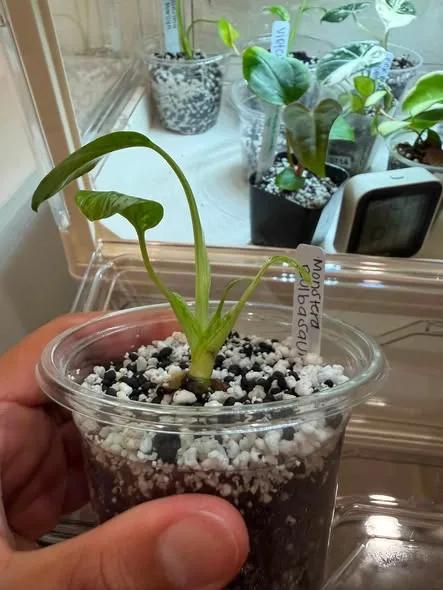
Growing Monstera too? Start your own diary. It's free and takes 2 minutes.
Start my Monstera diary →More rare plants and collector grows every day on Facebook: follow Exotics plants