 ⚠ Critical
Cell membrane rupture from chilling injury produces rapid, irreversible blackening in tropical plants — tissue that turns black will not regenerate and should be removed promptly to prevent secondary infection.
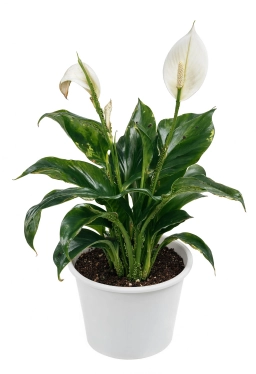
Peace Lily Leaves Turning Black — Cold Damage or Advanced Root Rot
Commonly affects: Spathiphyllum wallisii (Peace Lily)
Entire leaves or large sections turn black — not brown, but distinctly dark black or near-black — either rapidly following a cold event or progressively from the base of older leaves upward. Cold-induced blackening is usually sudden after temperature exposure and affects leaves uniformly. Root rot-induced blackening progresses more slowly and typically tracks from the base of the petiole upward as vascular tissue collapses.
Potential Causes
- 1Cold injury — exposure to temperatures below 10°C or cold draughts from windows, air conditioning vents, or exterior doors causes rapid cellular collapse
- 2Advanced Pythium or Phytophthora root rot blocking water transport, causing vascular tissue to die and blacken
- 3Overwatering in winter when plant metabolism slows — anaerobic soil conditions produce toxins that blacken root and leaf tissue
- 4Frost exposure on a windowsill — even brief contact with glass at or below 0°C causes irreversible chilling injury in Spathiphyllum
Solution Steps
- 1Remove all blackened leaves immediately — they will not recover and provide a site for secondary infection. Cut at the base of the petiole with sterile scissors.
- 2Move the plant away from any cold source — windows, air vents, or exterior walls. Keep in a location where temperatures remain above 16°C at all times.
- 3Unpot the plant and inspect the root system — if roots are black and mushy, proceed with root rot treatment: trim, treat with hydrogen peroxide, repot in fresh sterile substrate.
- 4If the substrate is waterlogged: allow it to partially dry out before the next watering and ensure drainage holes are unobstructed.
- 5Apply a dilute systemic fungicide drench if the blackening appears to have a fungal component (visible mycelium or sour smell from the root zone).
- 6After removing affected tissue and correcting the environment, give the plant 3–4 weeks to stabilise before expecting new growth.
Prevention Tip
Keep Peace Lilies at least 50 cm from exterior-facing windows in winter — windowsill temperatures can drop to 5–8°C on cold nights even when the room feels warm. Never position Spathiphyllum near an air conditioning unit that blows cooled air directly onto foliage.
Related Issues to Explore

Cold Draught Injury — Chilling Damage in Tropical Plants
Cold damage in Peace Lily escalates from yellowing to blackening within 24–72 hours of severe exposure — relocate immediately at the first signs.
Read guide
Root Rot — Pythium & Phytophthora Infection
Black leaves accompanying consistently moist soil indicate advanced root rot rather than cold injury — the treatment pathway differs significantly.
Read guide
Stem & Crown Rot — Botrytis & Fusarium spp.
Blackening that begins at the stem base and tracks upward indicates crown or stem rot rather than cold or vascular disease.
Read guide