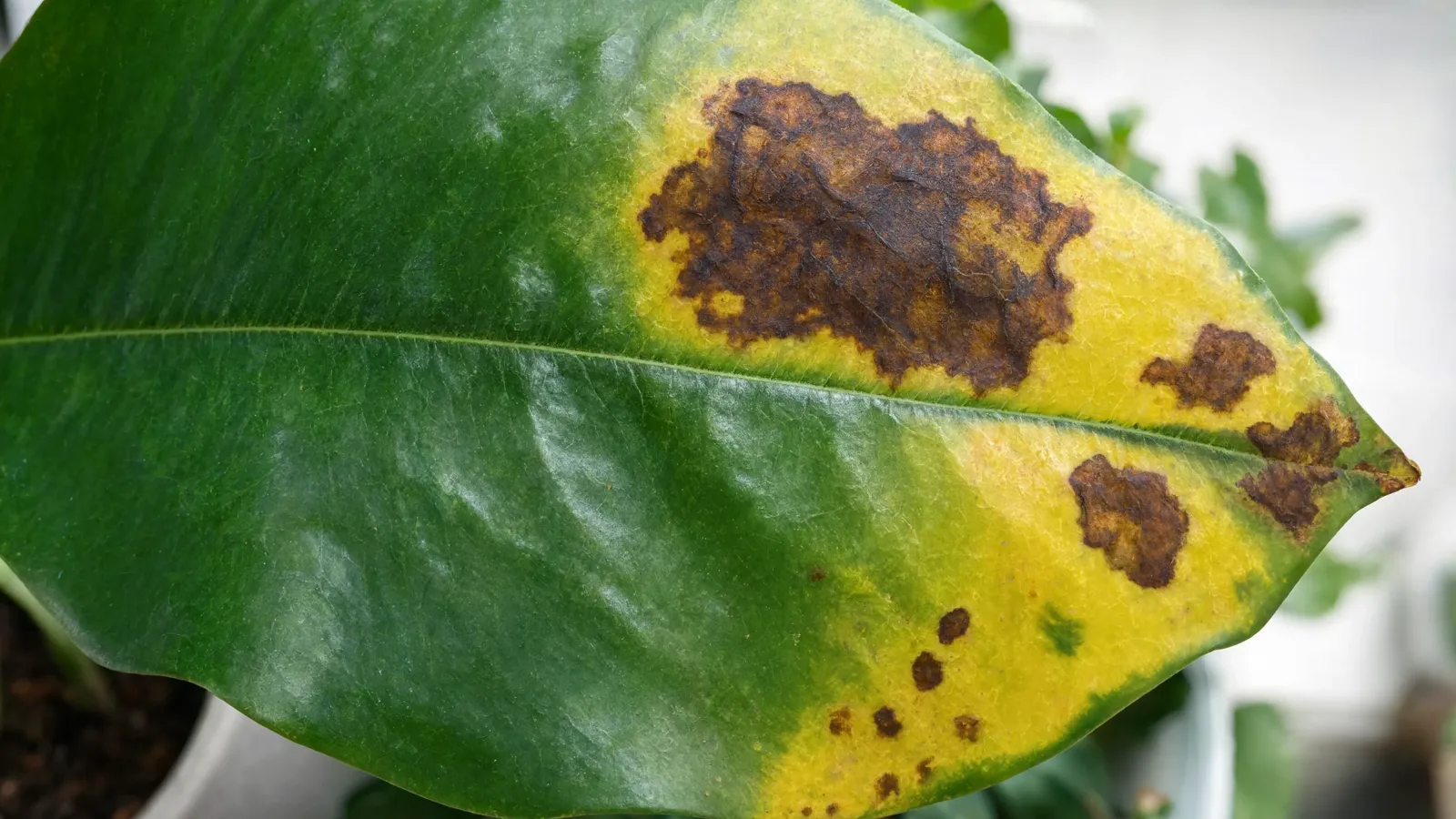
 ⚠ Moderate
Cold Draught & Chilling Injury
Commonly affects: Aglaonema, Anthurium andraeanum, Calathea, Alocasia, Syngonium podophyllum
Leaves develop water-soaked or translucent patches that turn brown or black, often appearing suddenly after a cold night or exposure to a draught. Affected areas may be concentrated on the side facing a window or door, and whole leaves can yellow, blacken, and drop. Tropical aroids show damage at temperatures well above freezing — often below 10–12°C.
Potential Causes
- 1Exposure to cold draughts from windows, exterior doors, or air-conditioning vents
- 2Night-time temperatures dropping below the plant's tropical tolerance threshold
- 3Leaves touching cold window glass during winter
- 4Sudden relocation from a warm to a cold environment without acclimatisation
Solution Steps
- 1Move the plant away from cold windows, doors, and draught sources to a stable, warm position.
- 2Maintain temperatures above roughly 15°C for most tropical aroids, avoiding cold spots overnight.
- 3Do not remove damaged leaves immediately — they continue to photosynthesise and may partially recover; remove only clearly dead tissue.
- 4Reduce watering while the plant is cold-stressed, as cold, wet substrate compounds the damage and invites rot.
- 5Avoid fertilising until the plant is in a stable, warm environment and showing renewed growth.
- 6Protect against repeat exposure by relocating before the next cold spell.
Prevention Tip
Keep tropical aroids away from cold glass and draughty doorways, especially in winter, and ensure overnight temperatures stay within their comfort range. A simple min/max thermometer at plant level reveals cold dips you might not otherwise notice.
Related Issues to Explore

Temperature Fluctuation Leaf Drop
Cold injury and temperature swings both stress tropical aroids — sudden drops cause discrete damage, while repeated swings trigger general leaf drop.
Read guide
Bacterial Soft Rot — Erwinia & Pectobacterium
Cold-damaged, water-soaked tissue is an easy entry point for soft rot bacteria — keeping chilled plants dry reduces the risk of secondary infection.
Read guide
Heat Stress & Leaf Curling
The opposite temperature extreme — both heat and cold push tropical aroids outside their comfort range and produce distinct leaf damage.
Read guideMore Leaf Problems Problems
See all →
Real Anthurium grow diaries
Growers on DailyGrowers log their plant week by week, one photo at a time. Here's how theirs are going.
 4 weeks
Mishel x rvdp anthurium first time growing
@thepepperguy
 4 weeks
Baby Anthurium growth
@thepepperguy
 4 weeks
Gieo hạt Clarinervium Queen của vườn “Đức Hùng Garden”
@duchunggarden
 3 weeks
Just bought another anthuriums
@thepepperguy
 1 week
A. Delta force x A. crystalinnum
@zrnkii
 1 week
Propagation of Anthurium portilae
@tahibonursery
Growing Anthurium too? Start your own diary. It's free and takes 2 minutes.
Start my Anthurium diary →More rare plants and collector grows every day on Facebook: follow Exotics plants