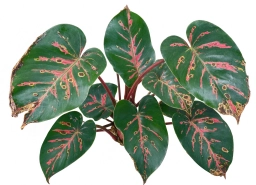
 ⚠ Critical
Ralstonia solanacearum colonises xylem vessels in the vascular system, physically blocking water transport — the plant wilts as if severely drought-stressed despite adequate soil moisture, as water cannot reach the canopy through the occluded xylem.
Bacterial Wilt — Ralstonia & Erwinia Vascular Infection
Commonly affects: Anthurium andraeanum, Philodendron spp., Alocasia spp.
The plant wilts suddenly and completely despite adequate soil moisture and no root rot symptoms. Wilting may affect individual branches or the entire plant simultaneously. If a wilted stem is cut transversely, the vascular tissue (xylem bundles) appears brown or discoloured rather than white. In Ralstonia infections, a milky bacterial ooze may exude from cut stems when squeezed. The plant does not recover after watering — vascular damage is irreversible once systemic infection is established.
The short answer
A plant that collapses completely within a day or two, in moist soil, with no yellowing beforehand, is bacterial wilt. The confirming test costs nothing: cut a wilted stem, suspend the cut end in a glass of clear water, and watch for a milky white thread streaming down from it. There is no cure. Remove the plant, and control cucumber beetles, which carry it from plant to plant.
Confirm it before you treat it
- 1Note the speed. Bacterial wilt is the fastest of the wilts — a healthy-looking plant can be flat within 48 hours, with the leaves still green.
- 2Do the water test. Suspend a freshly cut stem in clear water. A milky thread sinking from the cut confirms it; Fusarium and Verticillium produce nothing.
- 3Cut a stem across. The tissue may look water-soaked, and pressing the two halves together and slowly pulling apart can draw a sticky thread between them.
- 4Look for cucumber beetles, striped or spotted, on cucumbers, melons and squash. They are the vector, and feeding damage precedes the wilt.
- 5Check for yellowing first. Its absence is meaningful — Fusarium yellows lower leaves before wilting; bacterial wilt usually skips that stage entirely.
Potential Causes
- 1Ralstonia solanacearum or Erwinia (now Pectobacterium) infection entering through root wounds, insect feeding damage, or contaminated cutting tools
- 2Introduction via infected soil, water, or plant material from a contaminated source
- 3Soil-to-plant transmission through infected irrigation water or splashback from contaminated substrate
- 4Insect vectors (thrips, aphids) transmitting the bacteria between plants during feeding
Solution Steps
- 1Confirm diagnosis by cutting a stem transversely and squeezing — if bacterial ooze is present and the xylem is discoloured, bacterial wilt is likely rather than a fungal issue.
- 2There is no curative treatment for established systemic bacterial wilt — infected plants should be removed and destroyed (do not compost).
- 3Isolate all adjacent plants immediately. Decontaminate all tools, pots, and surfaces with 10% bleach solution or 70% isopropyl alcohol.
- 4If only one branch is affected and the main stem is symptom-free, aggressive pruning back to visibly healthy tissue plus copper bactericide treatment may save the plant — but full recovery is rare once the main vascular system is colonised.
- 5Drench surrounding soil and containers with a copper bactericide to reduce the bacterial load in the growing environment.
- 6Do not reuse pots or substrate from infected plants — destroy or fully sterilise before use with any new plant material.
What else looks like this
| Could be | How to tell it apart |
|---|---|
| Fusarium wilt | Slower, one-sided, with yellowing first and a brown vascular ring. The water test is negative. |
| Underwatering | Dry soil, and full recovery within hours of watering. Bacterial wilt never recovers. |
| Squash vine borer | Sudden wilt with a hole and sawdust-like frass near the stem base. Splitting the stem reveals a grub. |
| Root rot | Gradual decline with brown mushy roots. Bacterial wilt strikes a plant whose roots still look sound. |
| Heat wilt | Wilting in the afternoon heat with full recovery overnight. If the plant is upright by morning it is not this. |
Recovery timeline
- Day 1Run the water test. A positive result means removing the whole plant, roots included, straight away.
- Days 1–2Bin or burn the material. Disinfect any tool that cut into the plant before it touches another.
- Week 1Deal with the beetles — row covers on young plants, and inspection of the remaining crop. Without that, neighbouring plants follow.
- Weeks 2–4Watch for the same sudden collapse elsewhere. New infections show up as beetles keep feeding.
- Next seasonCover young plants until flowering, then uncover for pollination. Resistant varieties exist for some crops and are worth seeking out.
If you do nothing
The plant is lost within days regardless — this one moves too fast for intervention to matter to the individual plant. What matters is the vector: the bacteria overwinter inside cucumber beetles, not in the soil, so every day an infected plant stays in the bed is another day beetles feed on it and carry the infection onward. A single unremoved plant can cost an entire cucurbit patch over two or three weeks.
Common mistakes
- Treating it as a soil disease. Unlike Fusarium, the bacteria overwinter in the beetles. Rotating the bed without controlling beetles achieves very little.
- Watering a wilting plant. The soil is already moist and the vascular system is blocked; water cannot reach the leaves.
- Leaving the dead plant in place. It is a feeding station that infects every beetle that visits.
- Leaving row covers on through flowering. Cucurbits need insect pollination — covers must come off when flowers open.
- Spraying fungicide. It is a bacterium, and nothing sprayed on leaves reaches inside the vascular system.
Prevention Tip
Sterilise all cutting tools between plants with a 10% bleach solution or 70% isopropyl alcohol. Ralstonia and Erwinia enter primarily through wounds — clean tools are the most effective prevention against systemic bacterial diseases in plant collections.
Questions people actually ask
- What exactly is the water test?
- Cut a wilted stem, hang the cut end in a glass of clear water and watch closely for a minute. A milky-white thread streaming down confirms bacterial wilt.
- Can the plant recover?
- No. The bacteria physically block the water-conducting tissue, and that blockage is not reversible.
- Which plants are affected?
- Most often cucumbers, melons, squash and pumpkins. Cucumbers and melons are hit hardest; some squash are more tolerant.
- Is the soil contaminated afterwards?
- Far less than with Fusarium — this bacterium survives in the beetles rather than in soil, so the beetles are the thing to manage.
- Is the fruit safe to eat?
- Fruit already harvested and sound is fine. It is a plant pathogen, not a human one.
Related Issues to Explore

Erwinia Soft Rot — Pectobacterium Infection in Aroids
Erwinia (Pectobacterium) causes soft rot in the same genus of plants susceptible to bacterial wilt — distinguish by the tissue type affected (soft, mushy crown vs. firm vascular browning).
Read guideXanthomonas Bacterial Blight — Vascular Systemic Infection
Xanthomonas similarly causes vascular discolouration and wilt — copper bactericides and tool sterilisation are the shared prevention and management strategy.
Read guideMore Fungal & Bacterial Disease Problems
See all →
Real Philodendron grow diaries
Growers on DailyGrowers log their plant week by week, one photo at a time. Here's how theirs are going.
 1 week
Philodendron propagation
@thepepperguy
 1 week
my Philodendron ordatum growth🪴🪴🪴
@spongyboby
 1 week
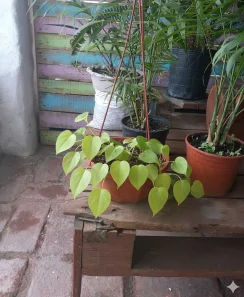
Propagation of Philodendron florida beauty
@tahibonursery
Growing Philodendron too? Start your own diary. It's free and takes 2 minutes.
Start my Philodendron diary →