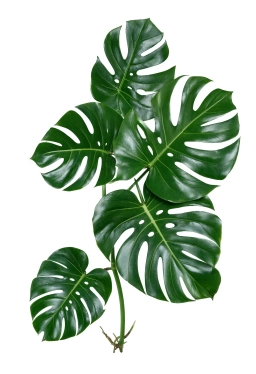
 ⚠ Minor
Healthy aerial roots waving in the air signal a climbing aroid seeking a surface to anchor to — a moss pole channels that habit into upright growth and larger, maturing leaves.
Aerial Roots & Lack of Climbing Support
Commonly affects: Climbing aroids — Monstera deliciosa, Philodendron spp., Epipremnum, Syngonium
A climbing aroid produces long aerial roots that wave in the air or sprawl across the floor with nothing to attach to, while the plant grows leggy, sideways, or downward. Leaves may stay small and fail to mature without the vertical orientation climbing species need. The aerial roots are healthy and seeking a surface to anchor to — the issue is the absence of a support.
Potential Causes
- 1Naturally epiphytic climbing aroids producing aerial roots to attach and climb
- 2No moss pole, trellis, or surface provided for the roots to grip
- 3The plant grown as a trailing or free-standing specimen against its climbing habit
- 4Maturation and larger leaves being limited by the lack of vertical support
Solution Steps
- 1Provide a moss pole, coir pole, or trellis and guide the stem and aerial roots onto it.
- 2Secure the stem gently to the support with soft ties until the aerial roots take hold.
- 3Keep a moss or coir pole lightly moist to encourage aerial roots to attach and feed.
- 4Tuck stray aerial roots toward the support or, if preferred, into the substrate — do not cut healthy ones unnecessarily.
- 5Trim aerial roots only for tidiness, accepting it does not harm the plant but removes their function.
- 6Expect larger, more mature leaves as the plant climbs and orients vertically.
Prevention Tip
Climbing aroids are happiest and most impressive when given something to climb — a moss pole turns sprawling, leggy growth into an upright plant with larger, maturing leaves. Provide support early rather than after the plant has already sprawled.
Related Issues to Explore

Failure to Fenestrate — Immature, Holeless Leaves
Climbing and maturing on a support encourages fenestration — providing a moss pole addresses both unused aerial roots and juvenile leaves.
Read guide
Snapped Petioles & Top-Heavy Collapse
A support prevents top-heavy collapse as well as channeling aerial roots — both structural issues are solved by a moss pole.
Read guide
Etiolation — Leggy, Weak Growth from Insufficient Light
Leggy, sprawling growth can stem from both low light and lack of support — addressing both produces compact, upright climbing growth.
Read guideMore Growth Issues Problems
See all →
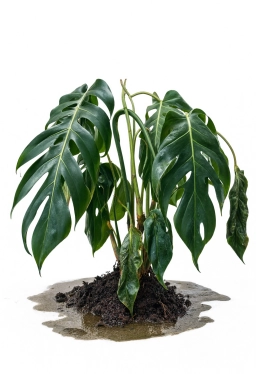
Real Monstera grow diaries
Growers on DailyGrowers log their plant week by week, one photo at a time. Here's how theirs are going.
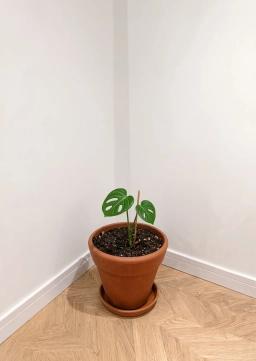
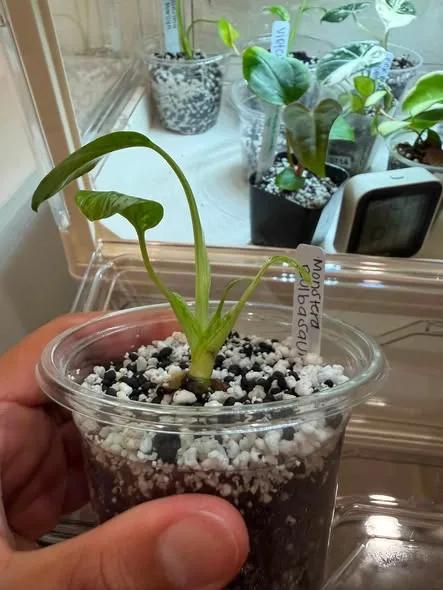
Growing Monstera too? Start your own diary. It's free and takes 2 minutes.
Start my Monstera diary →