
Plant Clinic · Category
Stem Problems
Soft, mushy, or collapsing stems, stem rot, and structural damage.
Stem problems — soft, mushy, or blackened stems — often indicate fungal rot (Phytophthora, Pythium, or Botrytis) spreading from the root zone or from a wound site. Stem collapse is a serious condition requiring rapid intervention. Early-stage stem rot can sometimes be reversed; advanced cases require cuttings to save the plant.
All Stem Problems
 ⚠ Critical
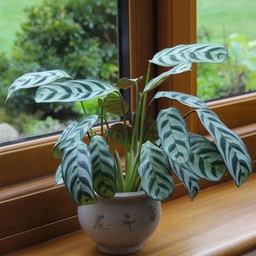
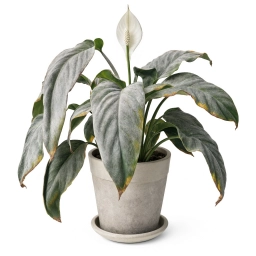
Spathiphyllum wallisii (Peace Lily)
Stem & Crown Rot — Botrytis & Fusarium spp.
The stem near or at soil level turns dark brown to black, becomes soft and waterlogged, and collapses inward. The plant may wilt suddenly despite adequate soil moisture, as vascular transport is interrupted. In Botrytis infections, a grey-brown fuzzy sporulation may be visible on affected stems under humid conditions. Once the crown (growing point at the base) is affected, recovery becomes extremely difficult.
 ⚠ Critical
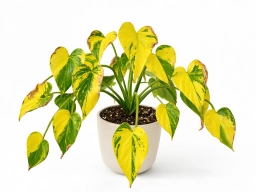
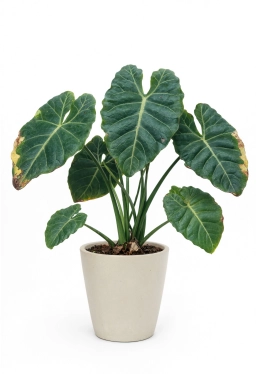
Alocasia spp.
Bacterial Soft Rot — Erwinia & Pectobacterium
Stems, petioles, or the corm turn into a soft, mushy, water-soaked mass that collapses, frequently accompanied by a distinctive foul, fishy odour. The rot spreads with alarming speed — a firm plant can liquefy at the base within a day or two under warm, humid conditions. Leaves yellow and topple as their support tissue disintegrates.
 ⚠ Minor
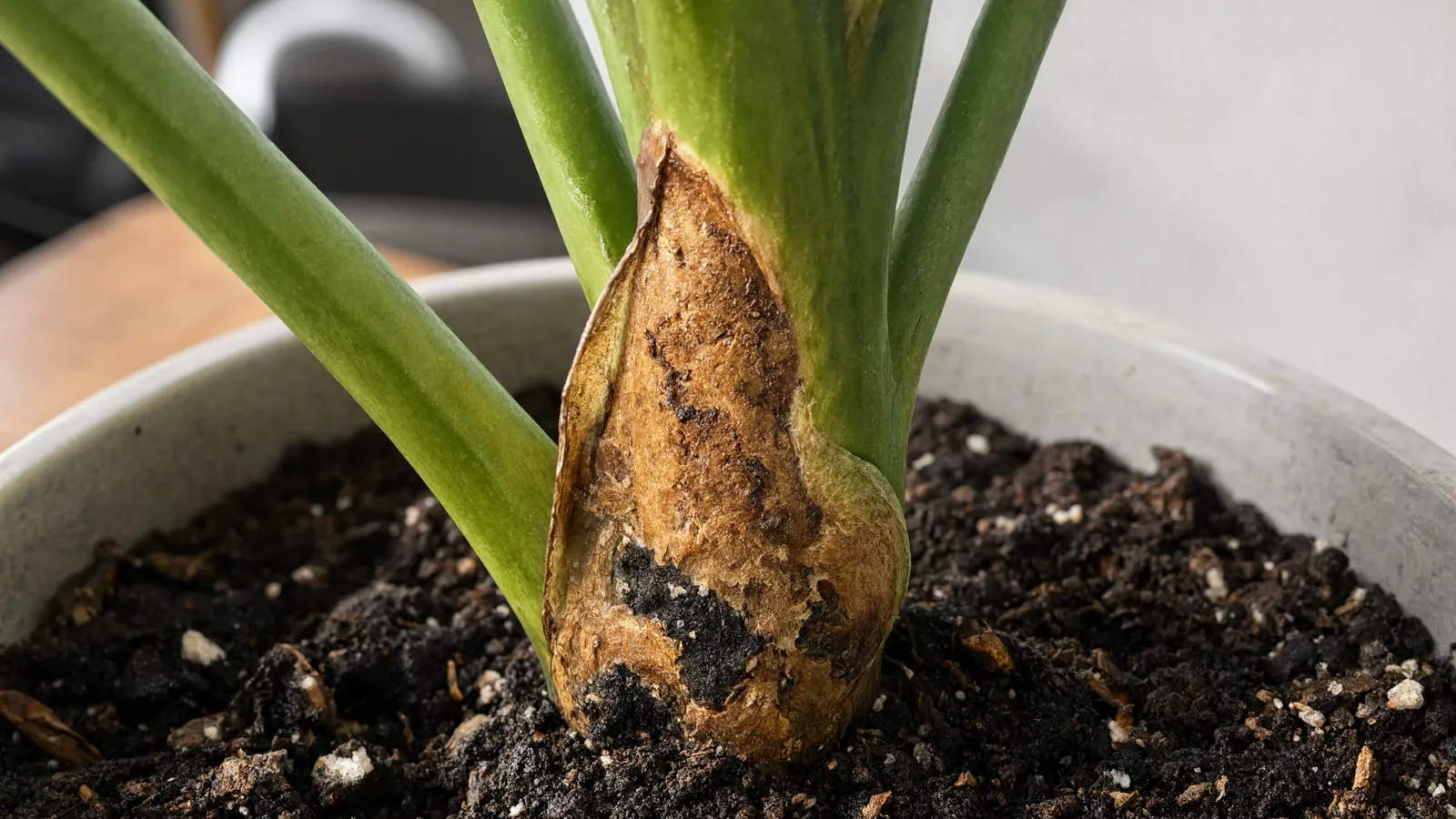
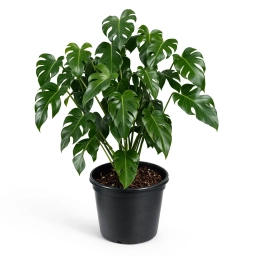
Most aroids in still indoor air — Monstera
Poor Airflow — Weak Stems & Disease Pressure
Plants grown in persistently still air develop weak, soft, elongated stems that struggle to support their own leaves, and a recurring cycle of fungal and bacterial problems. Moisture lingers on foliage and at the soil surface, and the boundary layer of stagnant humid air around the leaves favours mould, mildew, and rot. Growth is generally less sturdy and more disease-prone than in well-ventilated conditions.
 ⚠ Moderate
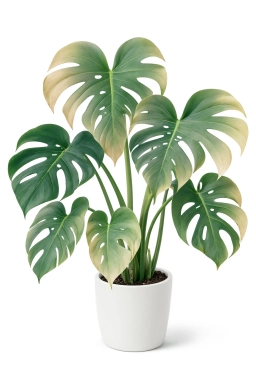
Top-heavy aroids — Alocasia spp.
Snapped Petioles & Top-Heavy Collapse
A leaf suddenly droops or hangs after its petiole (leaf stalk) bends, creases, or snaps near the base or a weak point. Large-leaved and long-stemmed aroids become top-heavy and the petioles cannot support the leaf, especially when reaching toward light. The break is a clean physical injury rather than the soft collapse of rot.
 ⚠ Moderate
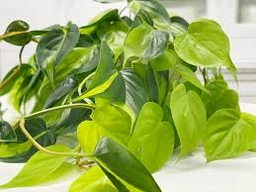
Epipremnum aureum — cuttings during water or substrate propagation
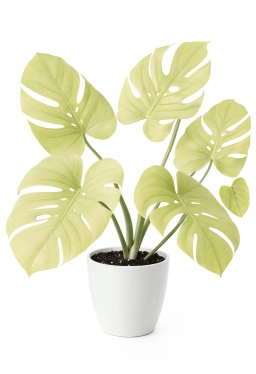
Pothos Cutting Stem Rot — Node Decay in Water & Substrate Propagation
Stem cuttings placed in water or moist substrate turn soft, brown, and slimy at the submerged cut end, progressing upward toward the node and ultimately killing the cutting before roots form. The water in the propagation vessel turns green or cloudy. Pothos is one of the easiest plants to propagate, but improper technique — particularly submerging too much stem tissue, using stagnant warm water, or propagating damaged cuttings — creates ideal conditions for the bacteria and water moulds that cause stem rot before adventitious roots form.
 ⚠ Minor
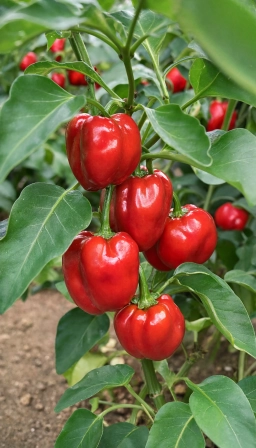
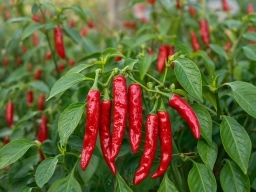
Capsicum annuum
Leggy, Weak Stems on Pepper Seedlings
Seedlings grow tall and thin with long gaps between leaf nodes, and stems are noticeably weak and floppy, sometimes unable to support their own weight without staking.
 ⚠ Minor
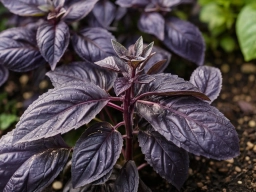
Ocimum basilicum (Basil)
Leggy, Sparse Basil Stems
Stems grow tall and thin with wide gaps between leaf sets, giving the plant a sparse, straggly appearance rather than the bushy, full form expected of healthy basil.
⚠ ModeratePassiflora edulis (Passion Fruit)
Vine Dieback on Passion Fruit
Sections of vine turn brown and die back from the tip, sometimes progressing toward the main stem, while other parts of the plant remain healthy.
⚠ MinorPassiflora edulis (Passion Fruit)
Wind Damage to Passion Fruit Vines
Vines snap, tear, or come loose from their trellis during strong wind, sometimes damaging developing fruit or breaking main stems.
⚠ ModerateActinidia deliciosa
Winter Cold Damage on Kiwi Vines
New growth emerging in spring is blackened or dies back after a late frost, and severe winter cold can kill entire canes or damage the main trunk.
⚠ ModerateActinidia deliciosa
Vine Dieback on Kiwi Plants
Sections of vine or entire canes turn brown and die back, sometimes progressing toward the main trunk, while healthy growth continues elsewhere.
⚠ MinorActinidia deliciosa
Wind Damage to Kiwi Vines
Vines tear loose from their trellis or canes break during strong wind, sometimes damaging developing fruit clusters.
⚠ ModerateVitis vinifera
Winter Cold Damage to Grape Buds
Buds fail to break in spring or produce weak, stunted shoots, with dead, blackened tissue visible when a damaged bud is cut open.
⚠ ModerateCarica papaya (Papaya)
Wind Damage to Papaya Trunks
The soft, hollow trunk bends, cracks, or snaps entirely during strong wind, sometimes toppling the whole tree.
⚠ MinorLavandula angustifolia / L. x intermedia (Lavender)
Split or Cracked Stems on Lavender
Woody stems develop visible cracks or splits, sometimes at the base near the crown.
Plant-Specific Guides
.webp)
Common Questions
What causes stem & crown rot — botrytis & fusarium spp.?
The stem near or at soil level turns dark brown to black, becomes soft and waterlogged, and collapses inward. The plant may wilt suddenly despite adequate soil … Full guide →
What causes bacterial soft rot — erwinia & pectobacterium?
Stems, petioles, or the corm turn into a soft, mushy, water-soaked mass that collapses, frequently accompanied by a distinctive foul, fishy odour. The rot sprea… Full guide →
What causes poor airflow — weak stems & disease pressure?
Plants grown in persistently still air develop weak, soft, elongated stems that struggle to support their own leaves, and a recurring cycle of fungal and bacter… Full guide →
What causes snapped petioles & top-heavy collapse?
A leaf suddenly droops or hangs after its petiole (leaf stalk) bends, creases, or snaps near the base or a weak point. Large-leaved and long-stemmed aroids beco… Full guide →