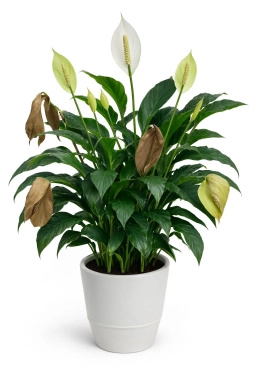
 ⚠ Minor
Stagnant water in humidity trays provides optimal conditions for fungus gnat oviposition and mould establishment — refresh trays weekly and add hydrogen peroxide to inhibit biological growth.
Humidity Tray Mould — Stagnant Water Breeding Fungus Gnats & Mould
Commonly affects: Most aroids in moist or terrarium conditions — Calathea, Spathiphyllum, Anthurium
White or grey mould grows on the pebbles or water surface of a humidity tray placed beneath the plant. Fungus gnat populations increase near the plant. A musty smell develops. While humidity trays can be effective tools for raising local RH, the standing water becomes a breeding site for fungus gnats (Bradysia spp.) and supports the growth of various moulds that can spread to the substrate surface and cause soil-level issues.
Potential Causes
- 1Standing water in the pebble tray not being refreshed frequently enough, becoming stagnant and colonised by fungi and gnat larvae
- 2Pebbles or gravel sitting in water creating a humid surface in direct contact with warm air — ideal conditions for fungus gnat pupation
- 3High organic matter in the water providing nutrients for mould growth
- 4The pot base sitting in the water rather than above it, allowing roots to absorb contaminated water
Solution Steps
- 1Empty and clean the humidity tray completely every 5-7 days. Scrub pebbles with dilute bleach (1:10), rinse thoroughly, and refill with fresh clean water.
- 2Ensure the pot base sits above the waterline on the pebbles — the water should evaporate upward around the pot, not be absorbed through the drainage holes.
- 3Add a few drops of 3% hydrogen peroxide to the tray water to inhibit mould and algae growth between cleanings.
- 4Place yellow sticky traps at soil level to catch adult fungus gnats and monitor population levels.
- 5If gnat populations are high, apply a Bacillus thuringiensis israelensis (Bti) drench to the substrate to target larvae.
- 6Consider a room humidifier as an alternative — it provides cleaner, more controllable humidity without creating standing water near the plant.
Prevention Tip
A drop of neem oil (fully emulsified in soapy water) added to the tray water weekly prevents both mould and gnat egg-laying on the water surface without affecting the plant.
Related Issues to Explore

Fungus Gnat Larvae — Root Damage from Bradysia spp.
Humidity tray standing water is a secondary gnat breeding site — address both simultaneously.
Read guide
Brown, Crispy Leaf Tips — Low Humidity & Salt Stress
Humidity trays address the same low-humidity conditions that cause tip burn — keeping the tray clean maximises its benefit.
Read guideMore Fungal & Bacterial Disease Problems
See all →
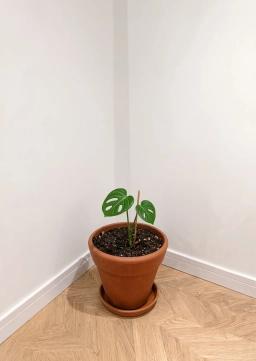
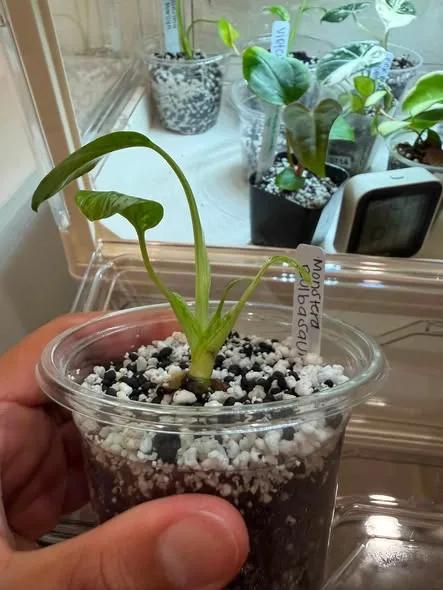
Real Monstera grow diaries
Growers on DailyGrowers log their plant week by week, one photo at a time. Here's how theirs are going.
Growing Monstera too? Start your own diary. It's free and takes 2 minutes.
Start my Monstera diary →More rare plants and collector grows every day on Facebook: follow Exotics plants