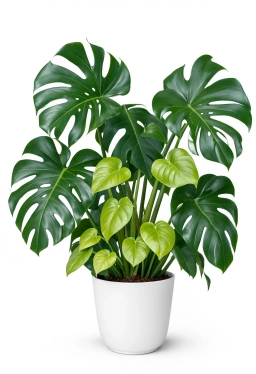
 ⚠ Moderate
Stomata on the underside of large tropical leaves are microscopic pores responsible for all gas exchange — oil and wax-based leaf shine products form a continuous film that progressively reduces CO₂ absorption and transpiration.
Leaf Shine Product Damage — Clogged Stomata & Waxy Residue Burns
Commonly affects: Monstera deliciosa, Philodendron erubescens, Anthurium andraeanum, Ficus lyrata
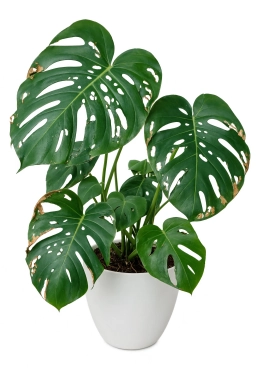
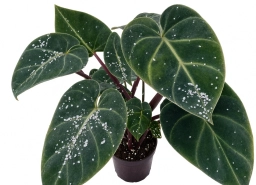
Leaves develop a greasy, uneven sheen with brown or bronze patches, or show small necrotic spots at regular intervals corresponding to stomata openings. The plant's transpiration is visibly reduced — leaves may feel warmer than uncoated leaves at the same temperature. Over time, photosynthetic efficiency decreases and new growth may emerge smaller. Commercial leaf shine products (oils, waxes, silicone sprays) that are not formulated for plants block the microscopic stomata through which gas exchange occurs.
Potential Causes
- 1Application of petroleum-based, silicone-based, or oil-based leaf shine products that leave a continuous film over stomatic pores
- 2Using the same leaf shine product repeatedly without ever washing leaves clean, building up residue layers
- 3Applying leaf shine at high concentrations, in direct sunlight, or in high temperatures — the product burns when it heats up on the leaf surface
- 4Applying neem oil sprays at too high a concentration (above 0.5%) or in direct sun — while neem is an organic pesticide, it can block stomata at high concentrations
Solution Steps
- 1Stop all leaf shine applications immediately. Wash all treated leaves with a dilute mild dish soap solution (2–3 drops per litre of water) using a soft cloth — wipe gently in the direction of the leaf's natural texture.
- 2Rinse with plain water after washing to remove any soap residue.
- 3Give the plant 3–4 weeks in good growing conditions to assess whether existing leaf damage is stable or progressive.
- 4Prune any leaves with significant necrotic coverage (more than 20%) — they will not recover full function and provide a drain on resources.
- 5For large-leafed plants (Monstera, Fiddle Leaf Fig), use a clean, damp microfibre cloth monthly to remove dust without any product — this is the safest and most effective leaf care method.
- 6If the goal is shine, a very small amount of coconut oil on a cloth, buffed to a very thin film, is the least harmful option — use rarely and sparingly.
Prevention Tip
The best leaf care requires no product: wipe large leaves monthly with a damp microfibre cloth, and shower small-leafed plants under room-temperature water. Dust-free leaves photosynthesise 30% more efficiently. No leaf shine product improves plant health — they are purely cosmetic.
Related Issues to Explore

Mechanical Leaf Damage — Physical Injury to Foliage
Leaf shine application often causes incidental mechanical damage to tender growing tissue and emerging leaves — handle plants gently during any maintenance.
Read guide
Sun Scorch & Leaf Bleaching — Photooxidative Damage
Leaf shine products act as a lens when heated by direct sun — applying any coating before sun exposure significantly increases scorch risk.
Read guideMore Leaf Problems Problems
See all →
Real Monstera grow diaries
Growers on DailyGrowers log their plant week by week, one photo at a time. Here's how theirs are going.
Growing Monstera too? Start your own diary. It's free and takes 2 minutes.
Start my Monstera diary →