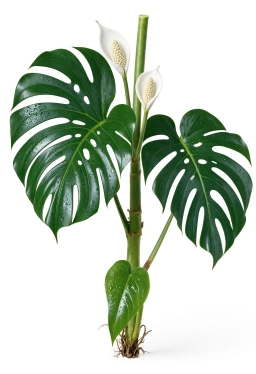
 ⚠ Minor
Clean tears, creases, and bruises that do not spread are mechanical damage from handling or contact — distinct from disease, and prevented by positioning rather than treated.
Mechanical Leaf Tears & Handling Damage
Commonly affects: Monstera deliciosa, Alocasia spp., Philodendron spp., large-leaved aroids
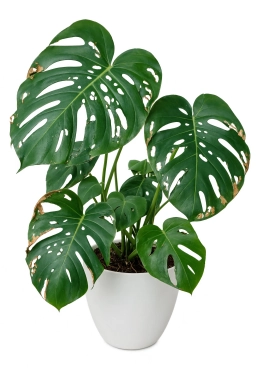
Leaves show clean tears, splits, creased lines, bruised patches, or snapped tips that do not match any disease pattern. The damage is localised, often along a fold or at a point of contact, and does not spread or progress. Large, thin aroid leaves are particularly prone to tearing during handling, moving, or from contact with nearby objects and pets.
Potential Causes
- 1Physical contact during moving, repotting, cleaning, or rotating the plant
- 2Leaves rubbing against walls, furniture, or neighbouring plants
- 3Pets or people brushing past large, exposed foliage
- 4Leaves unfurling against an obstruction, creasing or tearing as they expand
Solution Steps
- 1Identify and remove the source of contact — reposition the plant away from traffic, walls, or other plants.
- 2Leave torn but still-functional leaves in place; they continue to photosynthesise and tears do not spread.
- 3Trim only severely damaged or unsightly leaves, cutting cleanly with sterilised scissors.
- 4Support and protect large new leaves as they unfurl, ensuring they have clear space to expand.
- 5Handle the plant gently and support heavy leaves from underneath when moving it.
- 6Keep cut or torn edges clean and dry to avoid giving pathogens an entry point.
Prevention Tip
Mechanical damage is purely physical and does not spread — the fix is preventive positioning, not treatment. Give large-leaved aroids room to grow away from walkways, walls, and pets, and handle them gently and from beneath when moving.
Related Issues to Explore

Chewing Damage — Caterpillars & Leaf-Eating Larvae
Both produce holes and tears — mechanical damage leaves clean tears with no frass, while caterpillars leave ragged, bitten edges and droppings.
Read guide
Snapped Petioles & Top-Heavy Collapse
Related physical damage — petioles snap under weight or contact, while leaf blades tear; both call for support and careful positioning.
Read guide
Failure to Fenestrate — Immature, Holeless Leaves
Natural fenestration is sometimes mistaken for damage — true splits are clean and regular, unlike random mechanical tears.
Read guideMore Leaf Problems Problems
See all →
Real Monstera grow diaries
Growers on DailyGrowers log their plant week by week, one photo at a time. Here's how theirs are going.
Growing Monstera too? Start your own diary. It's free and takes 2 minutes.
Start my Monstera diary →