




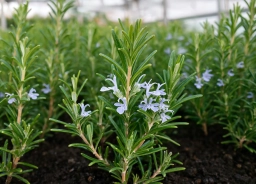
Rosemary Care Guide
Salvia rosmarinus
Rosemary (Salvia rosmarinus, formerly Rosmarinus officinalis) is a Mediterranean herb that thrives on neglect, full sun, and well-draining soil. It is one of the most drought-tolerant herbs you can grow, making it ideal for forgetful waterers. Rosemary can be grown as a compact pot plant on a sunny windowsill, as a garden shrub, or trained into a topiary shape. It is hardy in most temperate climates and can live for many years with minimal care.
Low-maintenance once established — the main risk is overwatering and poor drainage.
Care Requirements
💡 Light
6+ hours direct sunRosemary demands full sun — at least 6 hours of direct sunlight daily. It will survive in partial shade but growth is slow and the plant becomes leggy. South-facing windowsills work well indoors; a sunny balcony or garden position is ideal. Under grow lights, use a full-spectrum LED for 14–16 hours.
💧 Watering
Every 7–14 days (let soil dry)Allow the soil to dry out between waterings — rosemary is drought-tolerant and hates sitting in wet soil. Overwatering is the most common way to kill rosemary. In winter, reduce watering to once every 2–3 weeks. When in doubt, underwater rather than overwater.
💦 Humidity
Low — 30–50%Rosemary prefers lower humidity — it is adapted to dry Mediterranean conditions. Avoid placing near steamy kitchens or bathrooms. Good airflow prevents the fungal issues that high humidity can cause. A terracotta pot helps wick away excess moisture.
🌡️ Temperature
7–30°CRosemary is cold-hardy — most varieties survive down to -5°C to -10°C when established in the ground. Container plants are less cold-hardy (roots are more exposed) and should be brought indoors below -3°C. Thrives in warm, dry summers. Does not like extreme heat combined with humidity.
🌱 Substrate
Sandy, very well-drainingUse a gritty, well-draining mix — add 30–40% coarse sand, grit, or perlite to standard potting mix. Good drainage is non-negotiable. Rosemary will decline rapidly in moisture-retaining, peat-heavy substrates. Terracotta pots are ideal — they breathe and prevent waterlogging.
⚗️ Fertiliser
2–3 times per yearRosemary is a light feeder and does well with minimal fertilisation. Feed with a balanced slow-release fertiliser in spring and again in midsummer. Avoid high-nitrogen feeds — they promote lush but weakly flavoured growth. Do not fertilise in autumn or winter.
Seasonal Care
Rosemary is an evergreen perennial — it grows year-round, though most actively in spring and summer. It produces small blue or purple flowers in spring and summer, which are edible and attractive to pollinators. Harvest woody stems regularly to keep the plant compact. Very old plants (5+ years) can become woody and leggy — rejuvenate by cutting back by one-third in spring.
Repotting
Repot every 2–3 years in spring when roots fill the pot. Use a gritty, free-draining mix. Rosemary does not like root disturbance — handle roots gently and don't break them up excessively. Slightly pot-bound plants often perform better than those in oversized pots (which retain excess moisture).
Propagation
Take semi-hardwood cuttings in summer (July–August) — take 10 cm tips, strip the lower leaves, and insert into gritty compost or perlite. Keep barely moist and in bright light but out of direct sun. Roots develop in 4–8 weeks. Rosemary can also be grown from seed but germination is slow and variable — cuttings are faster and more reliable.
Rosemary FAQs
Why is my rosemary turning brown and dying?
Brown, dying rosemary is almost always caused by overwatering and root rot. Check that the pot has drainage holes and that the soil has dried before rewatering. Remove the plant from the pot — if roots are black and mushy, trim them away and repot in fresh, dry, gritty compost. Reduce watering going forward.
Can rosemary survive winter outdoors?
Most rosemary varieties are cold-hardy to about -5°C to -10°C when established in the ground in a sheltered spot. Container-grown rosemary is less hardy and should be brought under cover (unheated greenhouse, garage, or cold porch) when temperatures regularly drop below -3°C. In mild climates (zones 8–10), rosemary can stay outdoors year-round.
How often should I harvest rosemary?
Harvest rosemary regularly throughout spring and summer by cutting the tips of stems (up to one-third of the stem length). Regular harvesting keeps the plant compact and bushy and prevents it from becoming woody. Avoid cutting into old, woody stems without leaves — these rarely re-sprout.
Something wrong with your Rosemary?
Browse our full diagnosis guide — identification, treatment, and prevention for every common Rosemary problem.
Rosemary Problem Guide →Common Rosemary Pests
Aphid
Soft-bodied sap-sucking insects that colonise new growth rapidly, excreting honeydew that leads to sooty mould.
View guide →
Spider Mite
Microscopic arachnids that cause bronze stippling and fine webbing, thriving in hot, dry indoor conditions.
View guide →
Scale Insect
Armoured or soft-shelled insects that attach to stems and leaves, extracting sap under protective waxy covers.
View guide →
Mealybug
White waxy-coated soft scale insects forming cottony colonies at leaf axils, stems, and roots.
View guide →
Compare Rosemary
More Care Guides

.webp)
.webp)
🌱
Growing Rosemary? Track every week.
Log weekly updates, photos, and harvest notes — and see how your grow compares to others.