

Plant Clinic · Category
Nutrient Deficiencies
Nitrogen, iron, magnesium, and other nutrient deficiencies causing discolouration and poor growth.
Nutrient deficiencies produce characteristic, repeatable symptom patterns — once you learn to read them, diagnosis becomes straightforward. The location and progression of symptoms (old leaves vs new leaves, interveinal vs whole leaf) tells you which specific nutrient is lacking. This guide covers the four most common houseplant deficiencies.
All Nutrient Deficiencies
 ⚠ Moderate
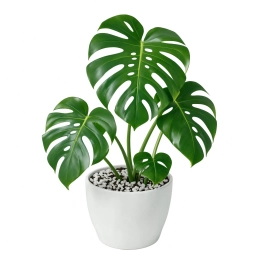
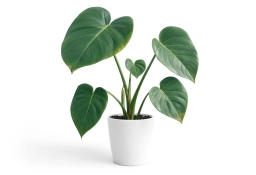
Monstera deliciosa
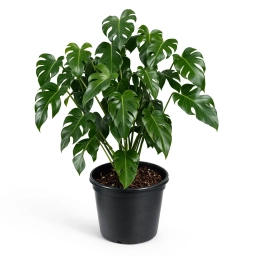
Phosphorus Deficiency — Purple-Tinted Leaves & Stunted Growth
Leaves develop a distinct purple or reddish-purple discolouration on their undersides, sometimes extending to the upper leaf surface in severe cases. Growth slows dramatically. Older lower leaves are affected first, as phosphorus is mobile and translocated to actively growing tissue. The purple tint results from anthocyanin accumulation — a stress pigment the plant produces when phosphorus-dependent energy transfer (ATP) pathways are disrupted.
 ⚠ Moderate
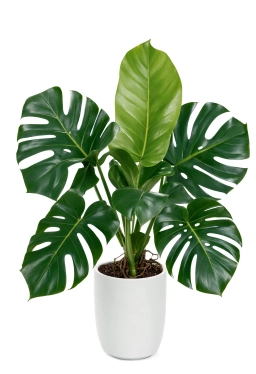
Monstera deliciosa
Zinc Deficiency — Small, Distorted New Leaves & Shortened Internodes
New leaves emerge unusually small, often half the size expected for the variety, with short, compacted internodal distances creating a rosette-like cluster. Leaves may be slightly misshapen or wrinkled. Zinc is essential for the production of auxin (the primary growth hormone) and for enzyme activation in chlorophyll synthesis — its deficiency causes a distinctive 'little leaf' syndrome that is easily confused with the effects of insufficient light.
 ⚠ Moderate
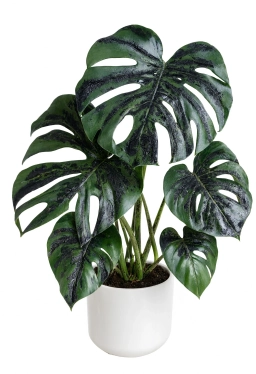
Monstera deliciosa
Manganese Deficiency — Young Leaf Interveinal Chlorosis & Pale New Growth
New, young leaves emerge pale yellow or light green, with a distinct interveinal chlorosis pattern where the tissue between veins loses green colour while the vein network remains visible. This mirrors iron deficiency but appears exclusively on the youngest growth — manganese is not mobile in plants and cannot be redirected from older leaves. As deficiency progresses, necrotic brown spots develop within the chlorotic zones.
 ⚠ Moderate
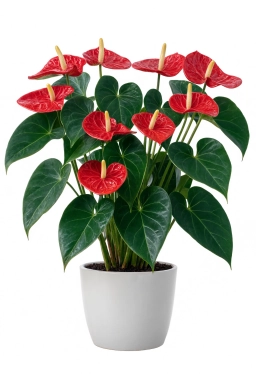
Anthurium andraeanum
Boron Deficiency — Deformed New Growth & Hollow Petioles
Emerging new leaves are stunted, thickened, or brittle — they may fail to unfurl fully, tear easily along the midrib, or develop a corky, water-soaked texture at the base. Leaf margins may be cupped or recurved. In severe cases, the growing tip aborts entirely. Boron is essential for cell wall formation, pollen viability, and the transport of sugars through phloem — its deficiency disrupts cell division in the most actively growing tissues first.
 ⚠ Minor
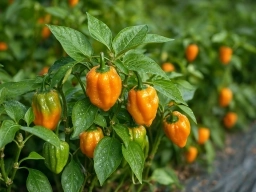
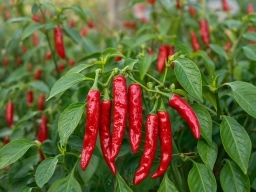
Capsicum annuum
Yellowing Leaves � Nitrogen Deficiency
Older, lower leaves turn uniformly pale yellow first, while newer growth at the top of the plant stays green. Growth overall slows, and leaves may be smaller than expected for the plant's age.
 ⚠ Minor
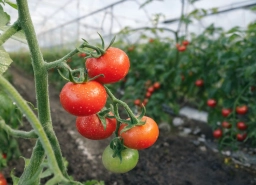
Solanum lycopersicum (Tomato)
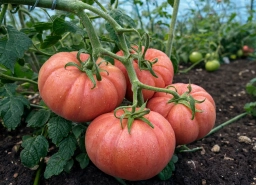
Yellowing Leaves � Nutrient Deficiency in Tomatoes
Older, lower leaves turn pale yellow or develop yellowing between the veins while the veins themselves stay green, depending on which nutrient is short. Growth may also slow overall.
⚠ MinorSolanum lycopersicum (Tomato)
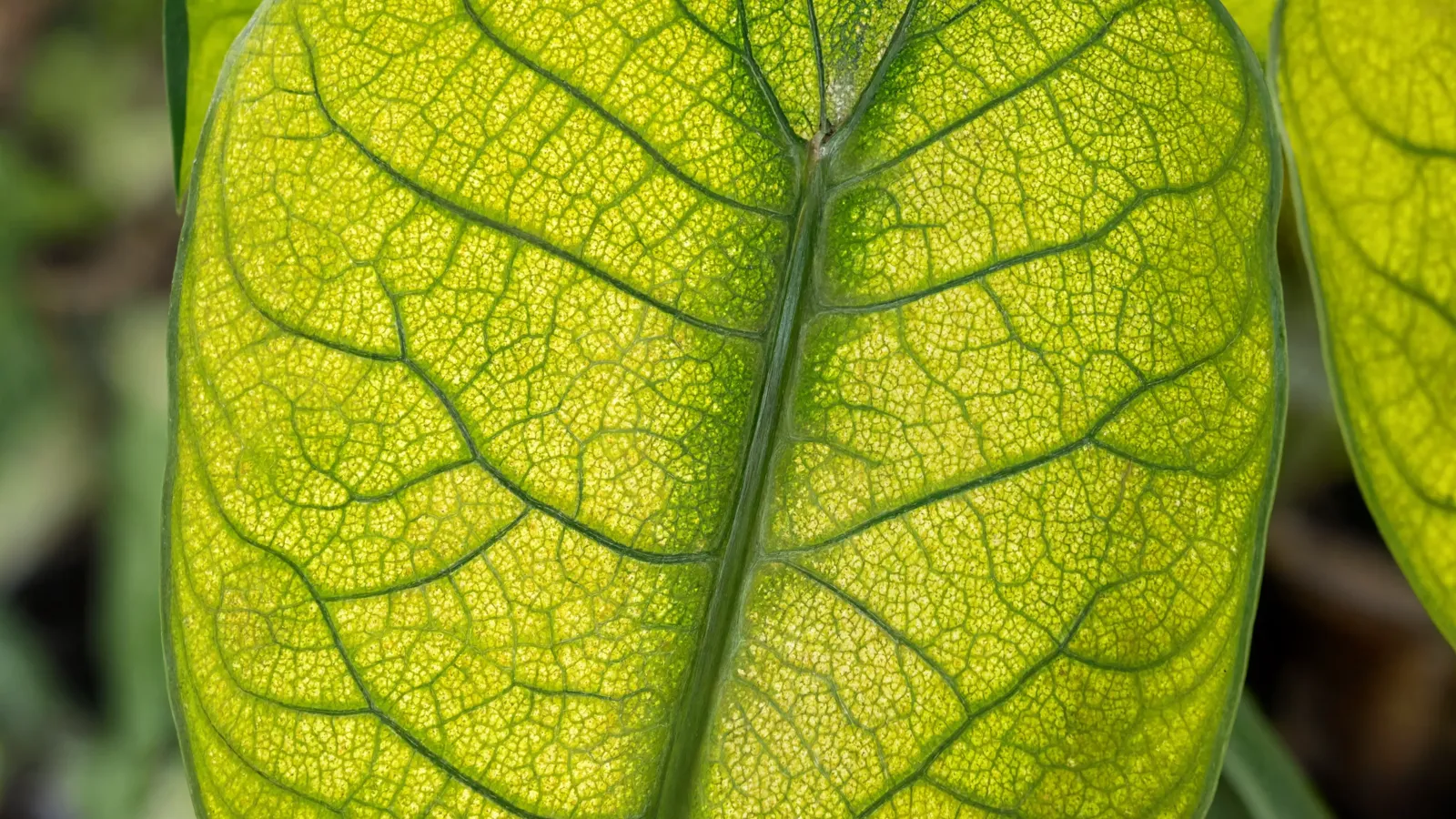
Magnesium Deficiency in Tomatoes
Yellowing appears between the leaf veins while the veins themselves stay distinctly green, starting on older, lower leaves and progressing upward if untreated. Leaf edges may curl slightly upward.
 ⚠ Minor
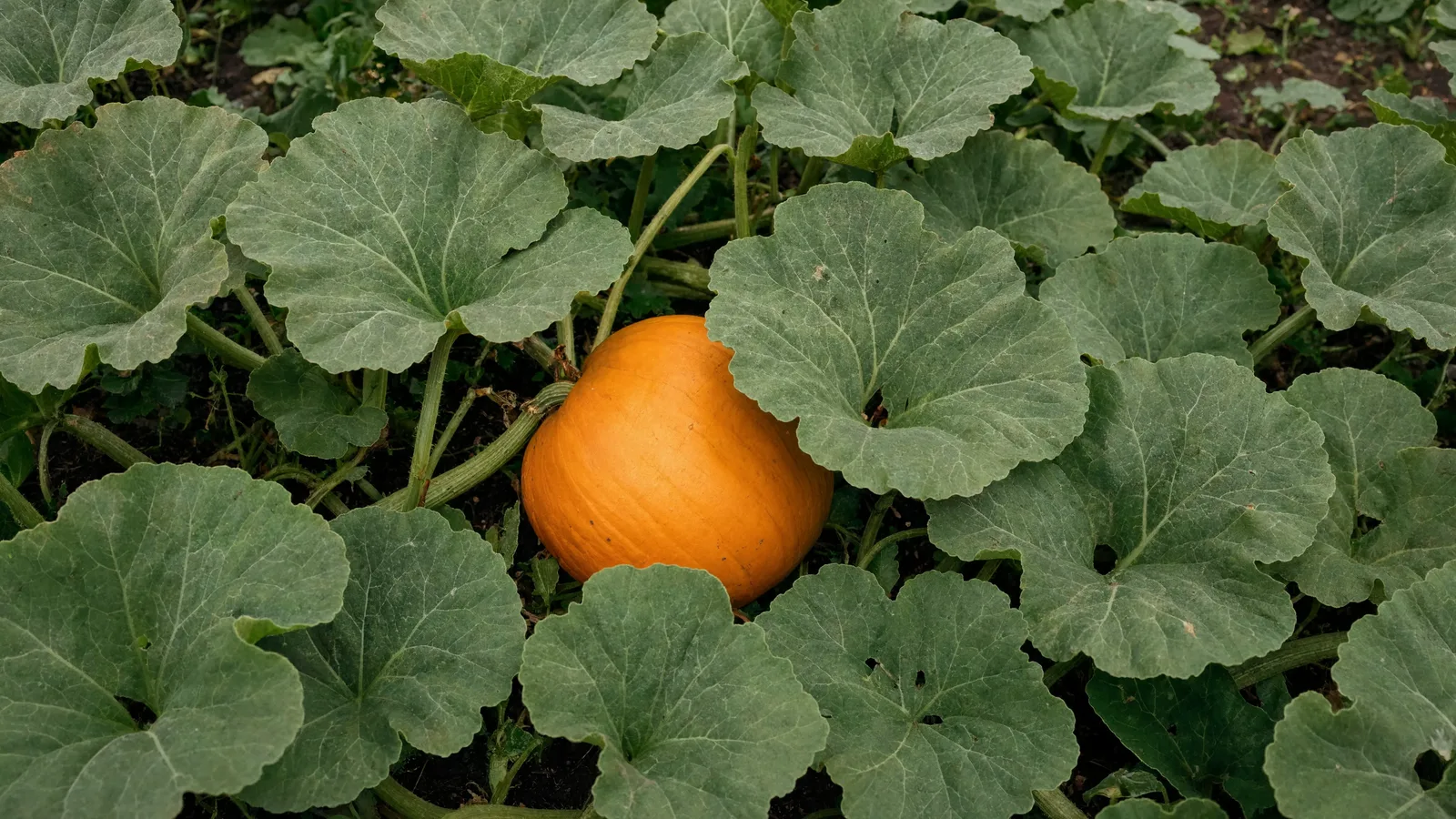
Cucurbita pepo
Yellowing Leaves — Nitrogen Deficiency in Pumpkin
Older, lower leaves turn pale yellow-green uniformly, while newer growth stays a healthier green. Overall vine growth slows and leaves may be noticeably smaller than expected.
⚠ MinorPassiflora edulis (Passion Fruit)
Yellowing Leaves — Nitrogen Deficiency in Passion Fruit
Older leaves turn uniformly pale yellow-green while new growth stays healthier green, with overall vine vigour declining.
⚠ MinorPassiflora edulis (Passion Fruit)
Potassium Deficiency in Passion Fruit
Leaf edges develop a scorched, brown, crispy margin while the leaf interior stays green, and fruit quality and retention decline.
⚠ MinorMusa acuminata
Potassium Deficiency in Banana
Older leaf margins develop a yellow-to-orange scorched border that progresses to brown, while the leaf centre stays green longer.
⚠ MinorMusa acuminata
Magnesium Deficiency in Banana
Yellowing appears between the leaf veins on older leaves while veins stay green, sometimes with a reddish-purple tinge along the margins.
⚠ MinorMusa acuminata
Yellowing Leaves — Nitrogen Deficiency in Banana
Older leaves turn uniformly pale yellow-green while new growth stays healthier, and overall growth rate slows noticeably.
⚠ MinorActinidia deliciosa
Iron Deficiency Chlorosis in Kiwi Vines
New leaves turn yellow with distinctly green veins, an interveinal chlorosis pattern, most common in alkaline or heavily limed soil.
⚠ MinorVitis vinifera
Magnesium Deficiency in Grape Vines
Yellowing appears between leaf veins on older leaves, starting at the base of the shoot and progressing toward the tip as the season advances.
⚠ MinorVitis vinifera
Potassium Deficiency in Grape Vines
Leaf margins develop a scorched, curled brown edge while the leaf centre stays green, and fruit ripening and sugar development can be affected.
⚠ MinorVitis vinifera
Iron Chlorosis in Alkaline Soil
New leaves turn yellow with distinctly green veins, an interveinal chlorosis pattern most pronounced in vines grown in alkaline or heavily limed soil.
⚠ MinorCucumis sativus (Cucumber)
Yellowing Leaves — Nitrogen Deficiency in Cucumber
Older leaves turn pale yellow-green uniformly while new growth stays healthier, and overall vine vigour and fruit production slow.
⚠ MinorBrassica oleracea var. italica (Broccoli)
Yellowing Leaves — Nitrogen Deficiency in Broccoli
Older leaves turn pale yellow-green uniformly while new growth stays a healthier colour, and overall plant size and head development are reduced.
⚠ MinorBrassica oleracea var. italica (Broccoli)
Boron Deficiency in Broccoli
Stems develop hollow or discoloured cores, and heads can show a rough, brown, corky surface texture rather than smooth, tight florets.
⚠ MinorBrassica oleracea var. italica (Broccoli)
Purple Leaves on Broccoli
Leaves, especially older ones, develop a reddish-purple tinge, most noticeable on the undersides and leaf margins.
⚠ MinorCarica papaya (Papaya)
Potassium Deficiency in Papaya
Older leaf margins develop a yellow-to-brown scorched border, and fruit size and quality decline even with otherwise adequate care.
⚠ MinorFragaria × ananassa (Strawberry)
Yellowing Leaves — Nitrogen Deficiency in Strawberries
Older leaves turn pale yellow-green uniformly while new growth stays a healthier colour, and overall plant vigour and fruit production decline.
⚠ MinorFragaria × ananassa (Strawberry)
Iron Deficiency Chlorosis in Strawberries
New leaves turn yellow with distinctly green veins, an interveinal chlorosis pattern, most common in alkaline soil.
⚠ MinorPhalaenopsis spp. and other Orchidaceae (Orchid)
Salt and Fertiliser Buildup on Orchid Roots
A white, crusty residue builds up on the potting medium surface or on roots, and the plant may show root tip burn or reduced vigour despite regular feeding.
⚠ MinorVarious ferns (Polypodiopsida)
Nutrient Deficiency Yellowing in Ferns
Fronds turn pale or yellow-green overall, sometimes with the oldest fronds affected first, despite otherwise correct light and watering.
⚠ MinorVarious ferns (Polypodiopsida)
Salt and Fertiliser Burn on Fern Frond Tips
Frond tips turn brown and crispy in a pattern distinct from general low-humidity browning, often following a recent fertiliser application.
⚠ ModerateVarious palms (Arecaceae)
Yellowing Fronds From Nutrient Deficiency in Palms
Older, lower fronds turn yellow, sometimes with distinct patterns like yellow-orange banding or spotting, while newer growth stays green.
⚠ CriticalVarious palms (Arecaceae)
Manganese Deficiency (Frizzle Top) in Palms
New fronds emerge weak, frizzled, and discoloured with necrotic streaking, distinct from the yellowing patterns of potassium or magnesium deficiency which typically affect older fronds instead.
⚠ CriticalVarious palms (Arecaceae)
Boron Deficiency in Palms
New fronds emerge stunted, twisted, or with a distinctive accordion-like pleating, and in severe cases the growing point fails entirely.
⚠ ModerateVarious palms (Arecaceae)
Potassium Deficiency Spotting on Palm Fronds
Older, lower fronds develop yellow-orange spots that progress to necrotic (dead, brown) spots, while the frond tip and margin may die back entirely in advanced cases.
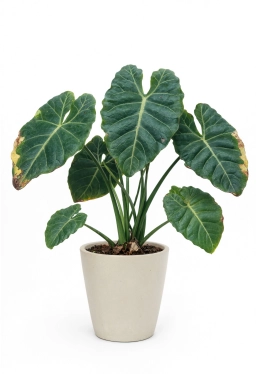
⚠ MinorColocasia esculenta (Taro / Elephant Ear)
Nutrient Deficiency Yellowing in Colocasia
Leaves turn pale yellow-green overall, or develop yellowing between the veins while veins themselves stay green, distinct from simple old-leaf senescence.
⚠ MinorZamioculcas zamiifolia (ZZ Plant)
Nutrient Deficiency in ZZ Plant
Leaflets appear pale or dull green overall, with growth notably slower than expected, despite otherwise correct light and watering.
⚠ MinorZamioculcas zamiifolia (ZZ Plant)
White Crust on Soil Surface of ZZ Plant Pots
A white, crusty residue builds up on the potting soil surface or pot rim, sometimes accompanied by reduced vigour.
⚠ MinorLavandula angustifolia / L. x intermedia (Lavender)
Excess Nitrogen Causing Lush but Non-Flowering Lavender
The plant grows unusually lush, soft, and leafy but produces few or no flowers, sometimes with weaker, floppier stems than typical.
⚠ MinorCapsicum annuum
Yellowing Leaves From Nutrient Deficiency in Bell Pepper
Leaves yellow, sometimes starting with older growth and sometimes between the veins, distinct from simple watering-related yellowing.
⚠ MinorCitrus limon (Lemon Tree)
Yellowing Leaves on Lemon Tree From Nutrient Deficiency
Leaves yellow in various patterns — overall pale colour, yellowing between green veins, or yellow blotching — depending on the specific nutrient involved.
⚠ MinorCitrus limon (Lemon Tree)
Overall Pale, Nitrogen-Deficient Leaves on Lemon Tree
Older leaves turn uniformly pale yellow-green, with the whole tree looking less vigorous than expected, distinct from the interveinal pattern of iron deficiency.
Plant-Specific Guides
Common Questions
What causes phosphorus deficiency — purple-tinted leaves & stunted growth?
Leaves develop a distinct purple or reddish-purple discolouration on their undersides, sometimes extending to the upper leaf surface in severe cases. Growth slo… Full guide →
What causes zinc deficiency — small, distorted new leaves & shortened internodes?
New leaves emerge unusually small, often half the size expected for the variety, with short, compacted internodal distances creating a rosette-like cluster. Lea… Full guide →
What causes manganese deficiency — young leaf interveinal chlorosis & pale new growth?
New, young leaves emerge pale yellow or light green, with a distinct interveinal chlorosis pattern where the tissue between veins loses green colour while the v… Full guide →
What causes boron deficiency — deformed new growth & hollow petioles?
Emerging new leaves are stunted, thickened, or brittle — they may fail to unfurl fully, tear easily along the midrib, or develop a corky, water-soaked texture a… Full guide →